How to audit ecommerce conversion friction without private analytics
You cannot calculate conversion rate from the outside, but you can inspect whether the public path to product discovery, trust, cart, and checkout is intact.
By Bruce Tyndall · Principal Consultant, Revvye
What a public ecommerce audit can observe
A public audit can follow category navigation, product discovery, variant selection, shipping and return information, cart entry, and the visible handoff into checkout. It can test whether those controls render and respond on mobile, whether broken links interrupt the path, and whether the page communicates the information a buyer needs before committing.
What it cannot prove
Without store analytics, order data, session recordings, or checkout logs, an outside audit cannot know the conversion rate, abandonment rate, revenue impact, or which traffic cohorts buy. Findings should therefore use observed severity, confidence, and path criticality—not invented monthly-loss estimates.
Use a four-pass review
First, confirm that navigation and internal links make important products reachable. Second, inspect product data and visible policies. Third, replay the cart and checkout path on representative mobile and desktop viewports. Fourth, document each failure with the page, control, observed behavior, and a verification step for the fix.
Check structured product signals without treating schema as a cure-all
Product and organization structured data can help search systems understand an ecommerce site, but markup must match the visible page and follow the relevant platform guidelines. Correct schema does not repair unclear product information or a broken checkout control; it supports an already coherent experience.
Turn the evidence into an implementation queue
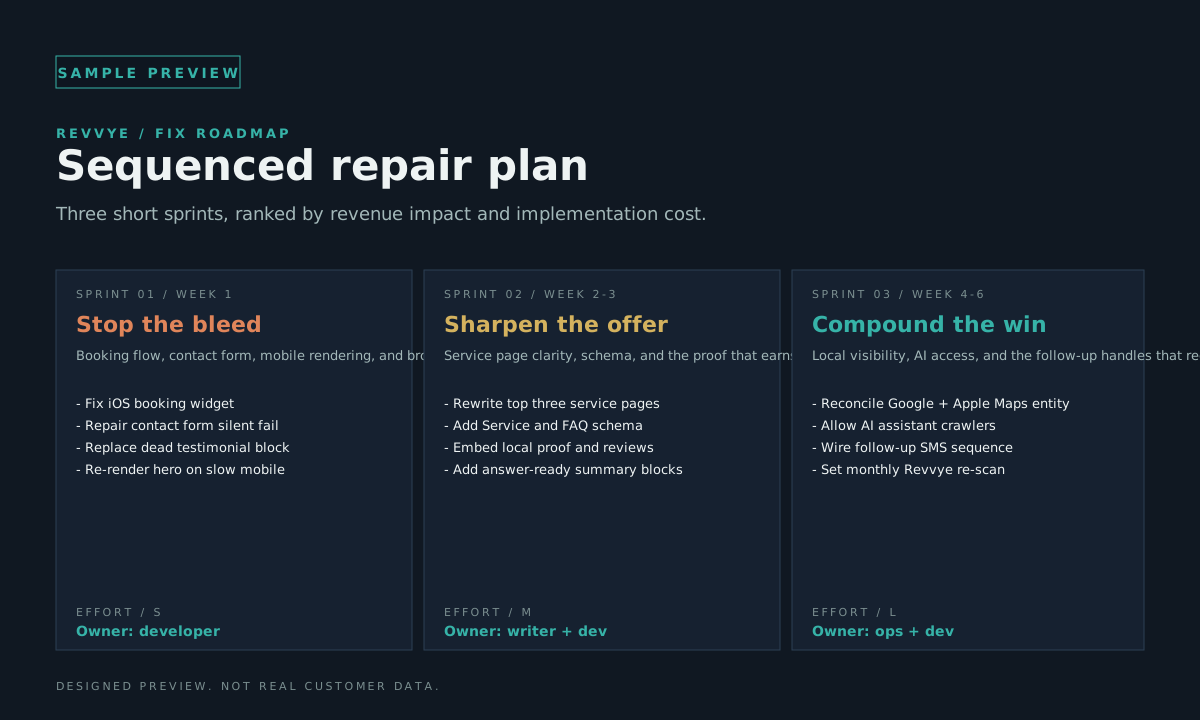
Sequence blocked transaction controls first, then trust and policy clarity, then discovery and performance improvements. Every item should include an owner, an acceptance check, and the public path that will be replayed after implementation.